
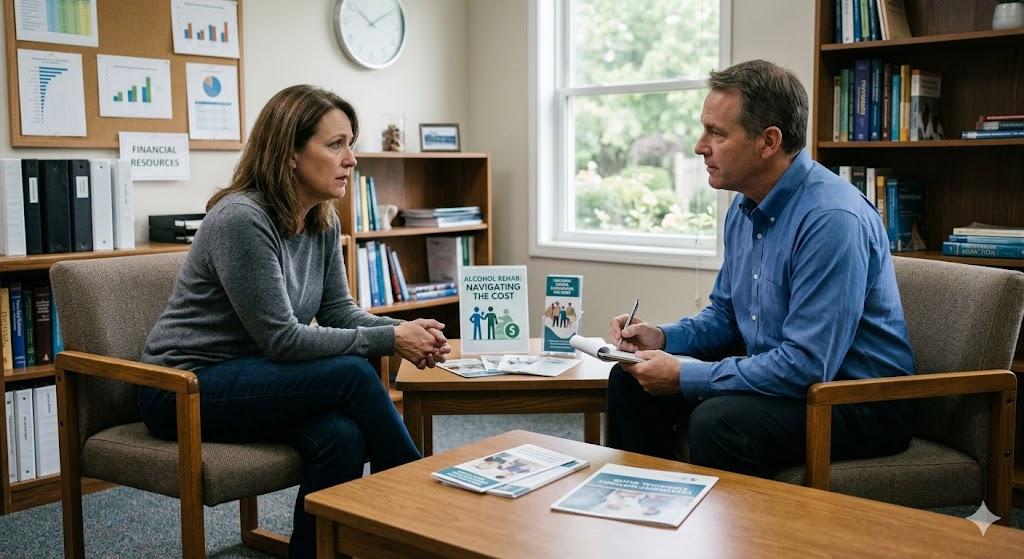
The cost of alcohol rehab varies greatly depending on the type of program, the provider, the length of stay, the location, and the services included. It can be free or cost tens of thousands of dollars. This article will explain what to expect based on various substance abuse treatment needs.
Table of Contents
- What Factors Affect the Cost of Rehab?
- How Insurance Plans Cover Alcohol Rehab
- What If I Don’t Have Insurance and Can’t Afford Rehab?
- What Is the Cost of Not Getting Addiction Treatment, and How BlueCrest Health Group Helps
- FAQs
Key Takeaways
- Medical bills are often a key barrier to addiction treatment, but how much does rehab cost?
- Rehab costs vary depending on the provider, the services offered, amenities, length of stay, location, and level of care. Some programs are free while others cost thousands of dollars.
- Insurance coverage can help pay for addiction treatment, but it’s important to be aware of deductibles and copays and to choose a clinic that works with your provider.
- If you can’t afford treatment and don’t have insurance, low-cost options are available.
Introduction
SAMHSA research reveals that of the 48.5 million people who require drug and alcohol treatment, only 15.6% get the care they need. A report published by the Open Society Foundations indicates that a lack of insurance or an inability to pay is a factor in 37.4% of cases. But exactly how much does alcohol rehab cost?
The cost of alcohol rehab varies wildly depending on the provider, program length, type of treatment, location, and services included. While free care is available, some rehab centers, such as luxury facilities, can charge tens of thousands of dollars. This article will break it down so you know exactly what to expect.
At BlueCrest, we never let costs interfere with clients getting the help they need. We will match you with an affordable drug and alcohol rehab provider, even if it’s not with our clinic.
What Factors Affect the Cost of Rehab?
Various factors affect the cost of rehab as follows:
Level of Care
Rehab can start at various levels and or take a step-down approach. For example, BlueCrest offers:
- Partial Care: Often, the primary form of care, partial hospitalization or partial care, involves staying at our treatment facility several hours a day, five days a week, for therapy sessions. Given the scope, these programs are most expensive.
- Intensive Outpatient Programs (IOP): Once patients have stabilized, they move on to IOP, attending shorter therapy sessions 3-5 days a week. It is less expensive than partial care.
- Outpatient Treatment: Typically, the final stage of treatment, outpatient care, involves going to therapy once or twice a week and is the least expensive stage of care.
Program Length
The duration of treatment varies depending on the severity of the addiction and mental health issues. However, longer treatment plans are more costly.
Location
Treatment centers in areas with a high cost of living typically charge more to cover higher rent and payroll costs.
Services Included
The cost of care also varies by the services offered based on the following factors:
- Medications: These can increase costs because they require thorough assessments, psychiatrist services, and prescriptions.
- Specialized Therapies: If required, these mental health treatments can increase expenses, as they are administered by medical experts who typically charge higher fees.
- Dual Diagnosis: Generally, the most costly type of addiction treatment because it involves psychiatric care, medication management, and higher therapy intensity.
Amenities Offered
Luxury facilities may offer amenities like private rooms, gourmet meals, fitness centers, and holistic therapies, making them more expensive than standard treatment providers.
How Insurance Plans Cover Alcohol Rehab
Rehab programs are expensive, but health insurance can make them more affordable. Thanks to the Mental Health Parity and Addiction Equity Act (MHPAEA) and the Affordable Care Act (ACA), addiction treatment insurance is more accessible than ever.
Enacted in 2008, the MHPAEA ensures that addiction treatment is covered under the same guidelines as other medical conditions. There are no additional limitations on this type of care, and co-pays are similar. The Affordable Care Act of 2010 built on the MHPAEA’s expanded protections, listing substance abuse disorder treatment as one of ten essential health benefits.
Insurance plans differ, and coverage varies. Learn about co-pays and deductibles to determine your out-of-pocket costs. Note that you will also pay less if you work with an in-network provider as opposed to an out-of-network provider.
While insurance is expensive, you may access more affordable care through Medicaid and Medicare. Medicaid is one of the largest payers for behavioral health treatment in the United States, with plans ranging from $1 to $10 per month. Medicare is a similar program for individuals over 65 with qualifying disabilities and covers opioid disorder treatment and outpatient services.
It’s wise to go through an insurance verification process before starting alcohol addiction services so you can find out if the clinic works with your provider and learn which services are covered. BlueCrest offers a thorough and transparent process so you know exactly how much you’ll pay.
What If I Don’t Have Insurance And Can’t Afford Treatment?

At BlueCrest, we understand insurance can be difficult to afford. Fortunately, many free and low-cost rehab programs are available for individuals without health insurance or those who cannot afford traditional rehab programs. Here are some to consider.
- Sliding Scale Fees: Many programs offer sliding-scale fees, charging clients based on their income.
- State-Funded Programs/SAMHSA Block Grants: SAMHSA grants are a primary source of funding for substance abuse treatment programs nationwide. On a state level, the Department of Mental Health and Addiction Services provides funding for addiction treatment through state budgets, federal grants, and Medicaid reimbursements. However, these programs are limited by eligibility requirements.
- Payment Plans: Many facilities provide flexible financing options to assist with costs.
- Employee Assistance Programs (EAPs): These employer-funded programs typically consist of 3-8 counseling sessions. While they don’t provide comprehensive care, they can be a starting point for many individuals.
- Nonprofit organizations, such as The Salvation Army, provide free rehab services for individuals in need, often requiring proof of financial need.
What Is the Cost of Not Getting Addiction Treatment, and How BlueCrest Health Group Helps
The cost of addiction is often significantly higher than the cost of rehab, with untreated addiction leading to expenses related to lost income, legal issues, and health problems. An alcoholic who drinks a 12-pack a day can spend over $3,000 in a year, not including potential legal issues that can add thousands more to their costs. Studies show that every $1 invested in addiction treatment can yield significant returns, including reduced crime rates and healthcare costs, making rehab a financially sound investment in the long run.
BlueCrest Health Group is dedicated to helping clients achieve a higher quality of life. We offer comprehensive outpatient rehab tailored to clients’ needs, considering their goals and lifestyle. Our comprehensive approach considers the mental, spiritual, and physical aspects of addiction and offers ongoing support for long-lasting recovery.
Contact us to learn more about what we offer or to ask any insurance related questions.
FAQs
How much does alcohol rehab cost without insurance?
Costs vary significantly by program type. Call us with any questions you may have.
How long does outpatient alcohol rehab take?
Program length varies by individual need and level of care. IOP programs can vary 8–16 weeks, while PHP is often shorter in duration but more intensive. Standard outpatient therapy can continue for months or even years, depending on the person’s recovery needs. A longer overall treatment duration is generally associated with better outcomes.
What is the difference between PHP and IOP?
Both are outpatient levels of care, meaning clients live at home during treatment. PHP (Partial Hospitalization Program) is the more intensive of the two, typically involving structured clinical programming for several hours per day, multiple days per week. IOP (Intensive Outpatient Program) offers a step down in intensity — usually three to five days per week with shorter sessions — allowing more flexibility for work, school, or family responsibilities. Cost reflects this difference, with PHP generally priced higher per day than IOP.
Sources
- SAMHSA. “SAMHSA Releases Annual National Survey on Drug Use and Health.” https://www.samhsa.gov/newsroom/press-announcements/20250728/samhsa-releases-annual-national-survey-on-drug-use-and-health
- National Association of Counties. “SAMHSA Releases New Data on Rates of Mental Illness and Substance Use Disorder in the U.S.” https://www.naco.org/news/samhsa-releases-new-data-rates-mental-illness-and-substance-use-disorder-us
- National Institute on Drug Abuse (NIDA). “Principles of Drug Addiction Treatment: A Research-Based Guide (Third Edition).” https://nida.nih.gov/sites/default/files/podat-3rdEd-508.pdf
- Centers for Medicare & Medicaid Services (CMS). “The Mental Health Parity and Addiction Equity Act (MHPAEA).” https://www.cms.gov/marketplace/private-health-insurance/mental-health-parity-addiction-equity
- U.S. Department of Health and Human Services (ASPE). “Affordable Care Act Expands Mental Health and Substance Use Disorder Benefits and Federal Parity Protections.” https://aspe.hhs.gov/reports/affordable-care-act-expands-mental-health-substance-use-disorder-benefits-federal-parity-protections-0
- U.S. Department of Health and Human Services. “Paying for Rehab with the Affordable Care Act.” https://betteraddictioncare.com/rehabs/paying-for-rehab-with-aca/
- Center for Health Care Strategies. “New Changes to Behavioral Health Intensive Outpatient Program Coverage in Medicare.” https://www.chcs.org/resource/new-changes-to-intensive-outpatient-program-coverage/
- Center for Medicare Advocacy. “New Substance Use Disorder Coverage in Medicare in 2024.” https://medicareadvocacy.org/new-substance-use-disorder-coverage-in-medicare-in-2024/
- NJ Addiction Centers. “NJ Medicaid Coverage for Drug Rehab and Treatment.” https://njaddictioncenters.org/insurance-cost/nj-medicaid-rehab/
- Addiction Resource. “Top 5 Rehab Centers That Accept New Jersey Medicaid (NJ FamilyCare).” https://www.addictionresource.net/insurance-coverage/medicaid/new-jersey/
- SAMHSA. “Substance Abuse Prevention and Treatment Block Grant.” https://www.samhsa.gov/grants/block-grants/sabg
- New Jersey Department of Human Services. “About Treatment/Getting Help.” https://www.nj.gov/humanservices/dmhas/resources/addiction/help/treatment.html